
Five common mistakes in flow monitoring
The whitepaper highlights common misconceptions that arise when selecting and installing industrial flow monitoring systems and provides guidance on the proper installation and commissioning of the correct sensor.
Unlock your knowledge advantage now!
With just a few details, you’ll get access to the selected exclusive content.
Avoiding Hotspots in Control Cabinets
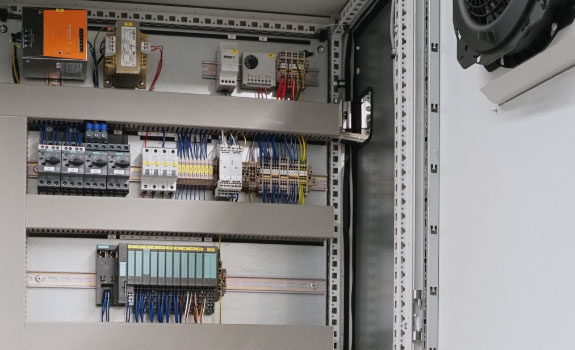
Rising packing densities, increasingly compact components, and higher performance requirements make thermal management in control cabinets a critical factor for system availability, measurement accuracy, and energy efficiency. When air cannot circulate properly, localized heat pockets — known as hotspots — can develop. These hotspots can shorten the service life of electronic components, distort measurement results, and, in the worst case, lead to unplanned downtime.
In this whitepaper, you will learn which physical principles drive heat development inside control cabinets and why even powerful fans or air-conditioning units do not automatically prevent critical temperatures. The whitepaper focuses on the causes of excessive heat generation, the typical consequences for instrumentation and control technology, and the key planning areas that must be considered for energy-efficient control cabinet design.
The whitepaper explains which five strategic areas are especially relevant for maintaining a stable cabinet climate: device topology, control cabinet design, ventilation, heat emission and temperature sensitivity of devices, and connection technology. It gives you a clear overview of what matters when assessing thermal risks and which planning mistakes can lead to unnecessary energy consumption or critical temperature peaks.
This download is intended for control cabinet builders, planners, maintenance teams, and technical decision-makers who want to identify hotspots early, better assess thermal loads, and create the basis for reliable, energy-efficient control cabinet cooling.
What You Can Expect from the Whitepaper
- Why higher energy density in control cabinets can lead to thermal problems
- How hotspots affect service life, measurement accuracy, and operational reliability
- What role airflow, convection, and active cooling play inside the cabinet
- Which five planning areas are crucial for stable temperature management
- Why the arrangement of components, cables, and cooling technology affects the energy balance
- Which typical do’s and don’ts matter in thermally optimized control cabinet construction