
Product NewsSensors, Inductive Sensors, IO-Link
Inductive sensor detects double sheets on one side
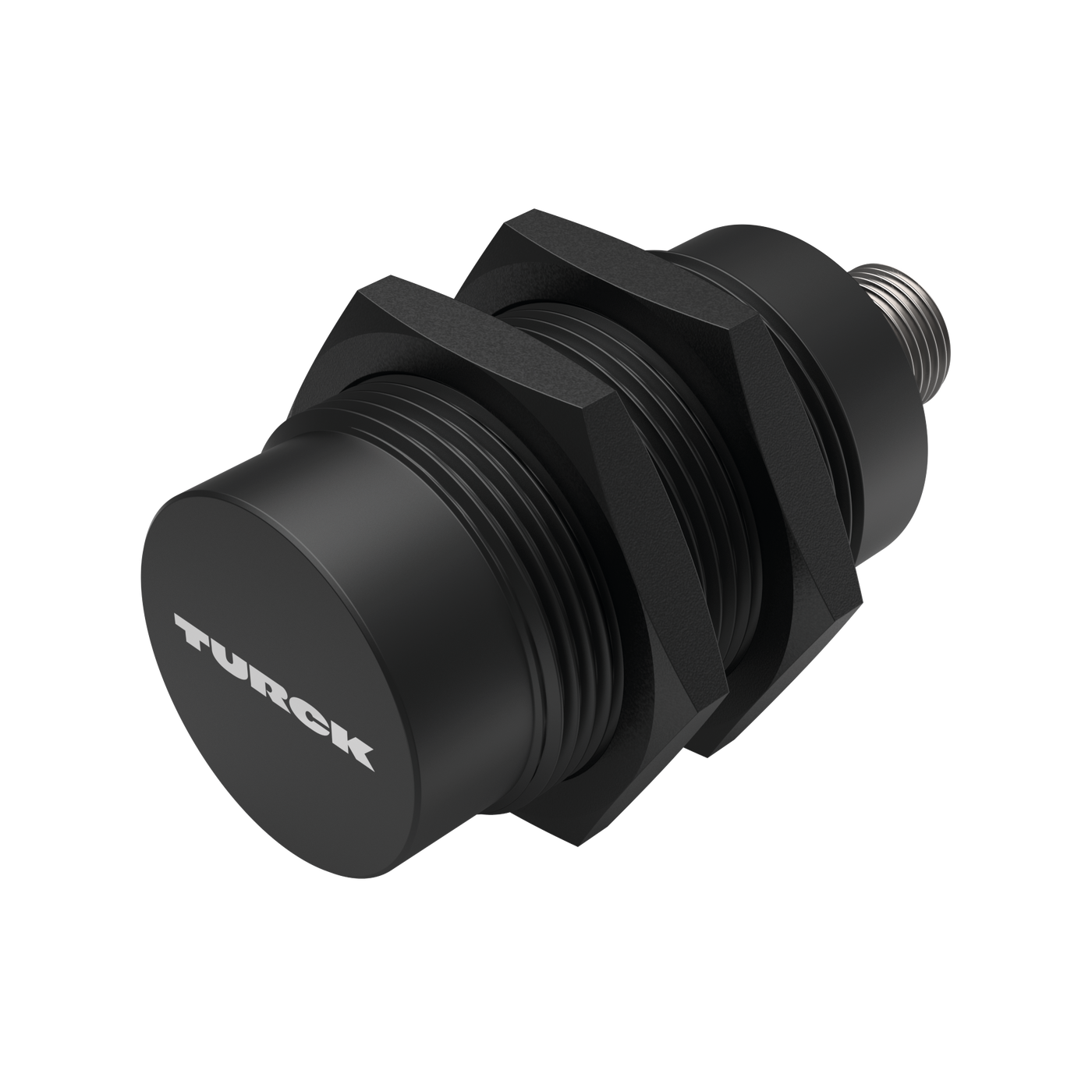
TURCK's NI5DS eliminates the need for a separate testing step and, thanks to IO-Link, does not require an external evaluation unit
Benefits
- Shorter cycle time because there is no separate inspection step for detecting double sheets
- Can be installed even in tight spaces thanks to single-sided detection
- Quick, flexible adjustments when switching setups to different types of metal and sheet thicknesses
- Thanks to IO-Link, no external evaluation unit is required
With the NI5DS, TURCK introduces an inductive double sheet sensor that detects double-fed sheets from one side. This reduces cycle time because robots do not have to transport the sheets to an additional inspection station. The sensor can be adjusted for all types of metal and various sheet thicknesses, allowing it to be adapted to the specific application. The detection range is 1 to 12 mm; 3 to 5 mm is recommended. The M30 stainless steel tubular housing features a ceramic coating and protects the sensor from welding sparks.
Configuration and measured values via IO-Link
The NI5DS-EG30F-IOL8X-H1141/S3709 transmits measured values and configuration data via IO-Link and can be connected to any IO-Link master. There is no need for a costly external evaluation unit, as required by other solutions for double-sheet detection. Fifteen pre-installed material configurations are available, and TURCK maintains a database of additional materials. Users set the material, sheet thickness, and switching thresholds via the IODD and switch between normally open and normally closed functions. Two programmable switching outputs signal the presence of one sheet and two sheets separately. The raw measurement values are also included in the process data.
Use in the press shop and the body shop
Oil and vacuum cause raw sheet metal and finished metal parts to stick together. If a double sheet goes unnoticed, it can be costly: In the best-case scenario, only a single component—such as a door—needs to be replaced. If the double sheet is located in the load-bearing body structure, the entire vehicle is scrapped. In the worst-case scenario, it damages the press or the tooling. The NI5DS inspects the sheets in the press and in the body shop. Its single-sided detection design also fits into tight installation spaces. Compared to alternative methods for detecting double sheets, installation is simpler. In addition to the automotive industry, the sensor is suitable for press manufacturers and metalworking companies in general.